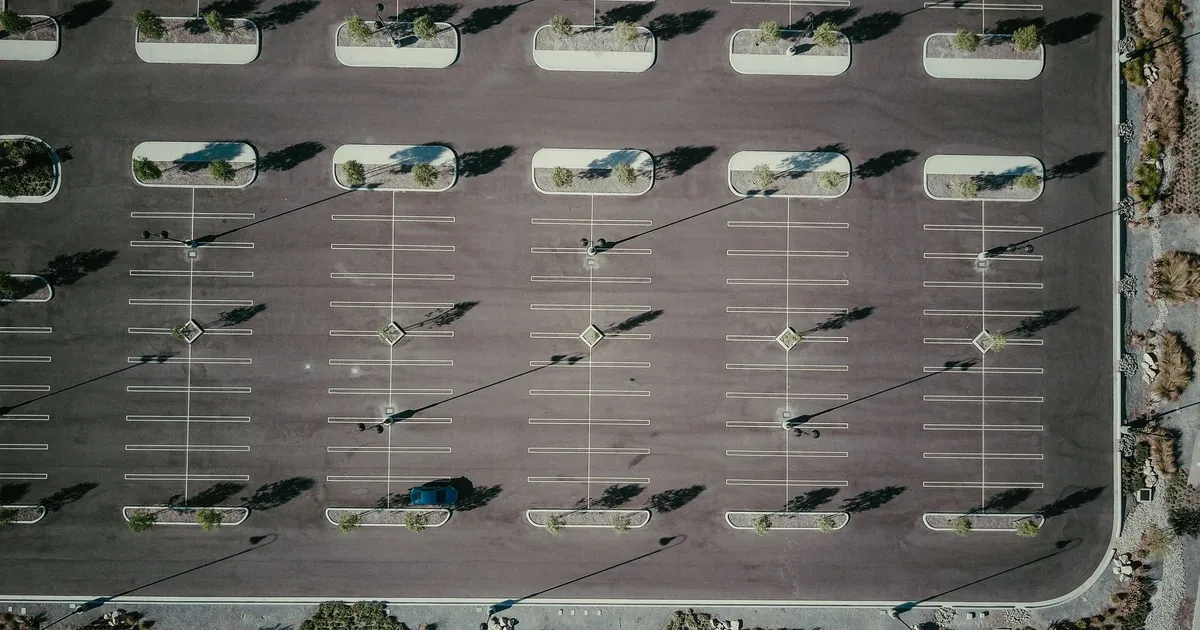
Here’s the short version: the most effective parking lot security cameras are monitored HD units with night vision and AI analytics, and for lots without power, a solar-powered mobile surveillance trailer covers the whole area within an hour. What stops crime is not the camera alone, it is a live agent who can warn off a thief before the break-in happens.
Parking lots and garages are some of the most crime-prone properties a business owns. They are open, often poorly lit, full of unattended vehicles, and rarely watched after dark. In Los Angeles, that adds up to a steady stream of vehicle break-ins, catalytic converter thefts, vandalism, and the liability headaches that follow. This guide explains why lots get targeted, what actually reduces crime, and how a mobile surveillance trailer protects a lot that has no power or wiring at all.
Why parking lots are crime magnets
A parking lot offers a thief everything they want: lots of targets, easy entry and exit, low foot traffic at night, and little chance of being watched. Every parked car is a potential payday, whether for the catalytic converter underneath, the smash-and-grab of valuables inside, or the vehicle itself.
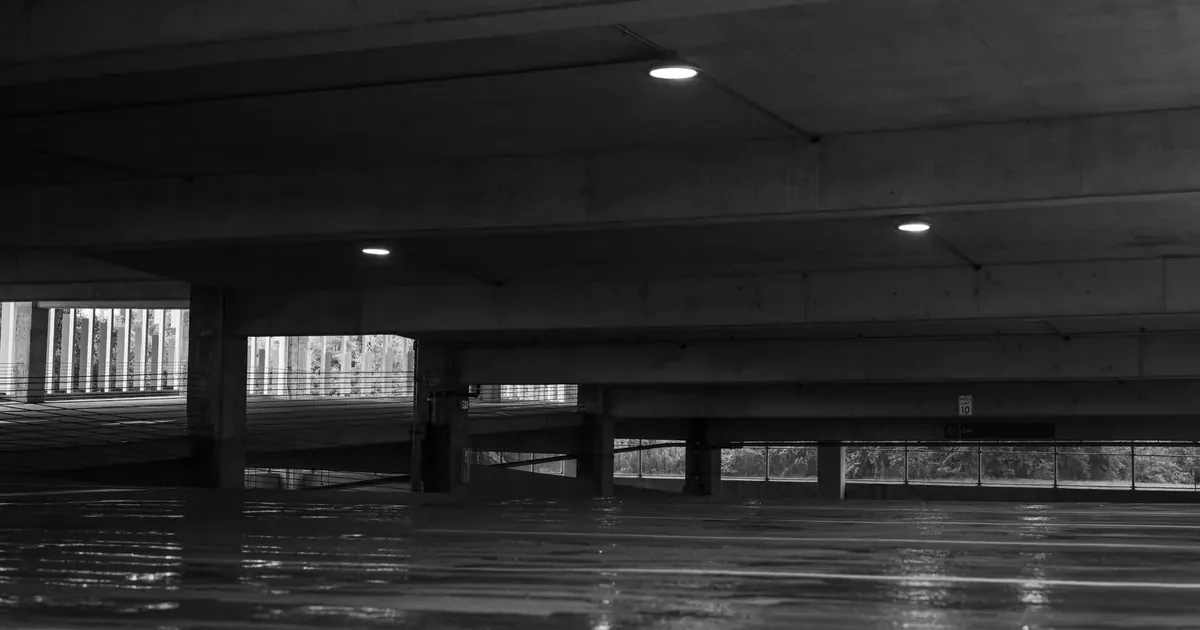
The Bureau of Justice Statistics consistently finds that parking facilities account for a meaningful share of property and vehicle crime. In a dense, car-dependent city like Los Angeles, the exposure is even higher. Catalytic converter theft in particular has surged across Southern California because the part is valuable, unmarked, and removable in under two minutes with a battery saw.
What actually reduces parking lot crime
The research is consistent on this point: visible surveillance combined with good lighting reduces crime, and active monitoring reduces it further. A camera that merely records gives you a video of your own loss. A camera that a trained agent is watching lets someone intervene while the crime is still preventable.
The most effective parking lot security combines four things:
- Visible cameras mounted high enough to cover the whole lot, which deter on sight.
- Night vision so darkness is not a blind spot, since most lot crime happens after hours.
- AI analytics that flag a person or vehicle behaving abnormally, like stopping beside a parked car at 2 a.m.
- Live monitoring so an agent can issue a real-time voice warning and call police with verified video.
Stopping catalytic converter theft
Catalytic converter theft deserves special attention because it is so fast. A thief slides under a car, cuts the converter free, and is gone in minutes, often without ever triggering an alarm. Prevention comes down to deterrence and speed of detection.
A monitored trailer with AI analytics can flag a vehicle that pulls up and stops next to a parked car after hours, the classic pattern, and put eyes on it instantly. A live voice warning through the trailer’s loudspeaker, telling the thief they are recorded and police are coming, ends most attempts before the saw finishes its cut. That real-time human response is something no passive camera and no parking sign can replicate.
Securing a lot with no power: the trailer advantage
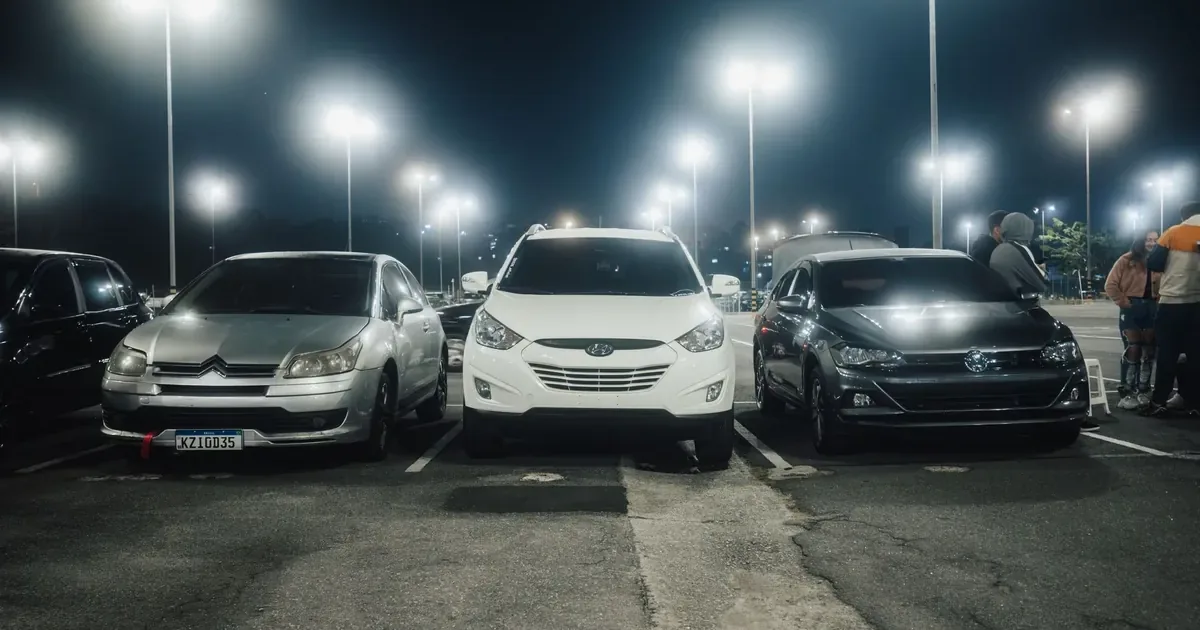
Many lots, especially overflow lots, gravel lots, event parking, and the far edges of large properties, have no electrical or network infrastructure. Running power and cable to cover them is expensive and slow. A solar-powered mobile surveillance trailer skips all of that.
It makes its own solar power, stores it for overnight operation, and transmits video over cellular, so it works on any lot from day one. Raised on its mast, a single trailer covers a wide area, and it can be repositioned as patterns change or relocated entirely when the need moves. For lots that need coverage immediately, our rapid deployment trailers go live the day they arrive.
Surveillance and liability protection
There is a second reason to monitor a lot that owners often overlook: liability. Property owners generally owe visitors a duty of reasonable care, and a parking lot where assaults, thefts, or accidents occur can become the basis of a premises-liability claim. A documented, monitored camera system helps on both sides of that equation. It deters the incidents that lead to claims, and when something does happen, clear footage establishes what actually occurred.
That evidence cuts both ways in the owner’s favor: it supports legitimate claims and refutes fraudulent ones. For commercial property owners, that protection is a meaningful part of the return on a surveillance investment, alongside the cybersecurity and physical-security discipline that protects the rest of the business.
How to choose parking lot security in Los Angeles
When you evaluate options for a lot, focus on the service, not just the spec sheet:
- Confirm live monitoring is included. Recording alone does not deter.
- Ask about night performance. Most lot crime is after dark, so night vision is non-negotiable.
- Check the analytics. Good AI ignores passing animals and headlights so alerts stay meaningful.
- Match the term to the need. Whether you lease, rent, or buy should fit how long you need coverage.
- Choose a local provider. An LA-based team can deploy this week and respond fast.
Secure Techies is based in Canoga Park and protects parking lots and garages across Los Angeles and Southern California, backed by the same team that handles our network security and managed IT clients. We watch your lot the way we watch a client’s network: continuously, and with someone ready to act.
Lighting, signage, and layout still matter
Cameras do the heavy lifting, but a few low-cost measures multiply their effect. Good lighting is the most important. A well-lit lot removes the dark corners thieves prefer and makes camera footage far clearer. Pair lighting with visible cameras and the deterrent effect compounds, because a thief can see they are both exposed and recorded.
Signage matters too. Posted notices that a lot is monitored 24/7 deter opportunists before they ever act, and they are nearly free. Layout helps as well: a single controlled entrance funnels every vehicle past the cameras, and parking high-value or long-term vehicles within clear camera view reduces easy targets. None of these replace monitoring, but together they turn a soft target into a hard one. The principles echo the crime prevention through environmental design guidance that security agencies have promoted for decades: shape the space so crime is harder and more visible.
Cameras versus guards for parking lots
Many lot owners default to hiring a guard, but for most lots a monitored camera setup covers far more ground for far less money. A single guard can watch one entrance or patrol one route, leaving the rest of a large lot unobserved at any moment. A monitored trailer or camera array watches every row at once, never tires, and records continuous HD evidence.
The cost difference is stark. Staffing a guard around the clock can cost more in a week than a monitored system costs in a month, and the U.S. Bureau of Labor Statistics tracks guard wages that climb quickly across multiple shifts. For lots that genuinely need a human presence, the most cost-effective approach is monitoring for full coverage plus a guard only where hands-on control is required, such as a staffed entry booth during peak hours. That layered model gives owners the best of both without paying guard rates to watch an empty lot all night.
Common parking lots that benefit most
Some lots carry more risk than others, and a few types see the biggest payoff from monitored cameras or a mobile trailer:
- Retail and shopping center lots, where customer vehicles and foot traffic create both theft and liability exposure.
- Multi-family and apartment parking, where residents expect a secure place to leave their cars overnight.
- Auto dealership and rental lots, holding rows of high-value vehicles in the open.
- Employee and commuter lots, often empty and unwatched during long workdays.
- Event and overflow parking, used heavily for short periods with no permanent infrastructure.
In each case the math is the same: the cost of monitoring is small next to the combined cost of theft, vandalism, and the liability claims that follow an incident in an unsecured lot. For property owners managing several of these, a mobile trailer that relocates between lots stretches a single investment across multiple problem areas.
A parking lot does not have to be the easiest target on the block. With monitored cameras or a mobile trailer covering it, you turn an open invitation into a hard target that thieves skip. Contact Secure Techies for a lot assessment and we will show you exactly how to cover it, with or without existing power.
Frequently Asked Questions