Site surveillance
A Mobile Surveillance Trailer on a Warehouse Yard
No trench, no new power drop. A solar mobile unit on the gravel, sight lines walked at dusk, and a night test before we called it placed.
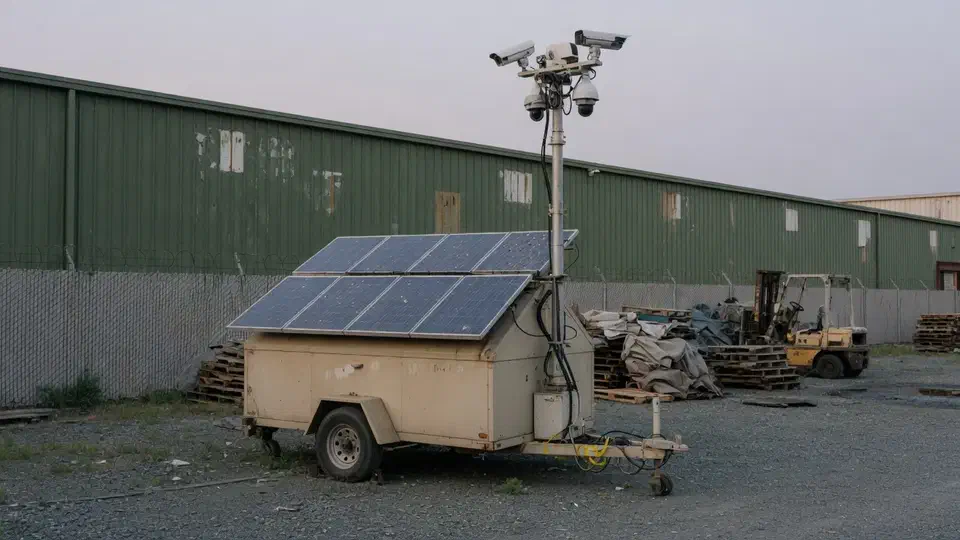
- Industry3PL warehouse
- WhereInland Empire
- Timeline10 days
- EngagementYard trailer
Meet the client
A warehouse whose building cameras stopped at the dock
Operator name, yard address, and monitoring-account details are withheld at the client's request. The engagement type, method, and constraints are real.
A regional 3PL in the Inland Empire asked Secure Techies to cover a warehouse yard the building cameras could not see. Cabling a pole to the far fence meant a trench and a power drop the lease would not wait for. We walked sight lines, placed a solar mobile surveillance trailer on the gravel, set the live-alert path, and ran a night test before the next weekend.
Primary goals
What success had to look like
See the far fence after dark
Building cameras covered the dock. They did not cover the gravel where trailers and copper sat overnight.
Skip the trench
A permanent pole was a facilities project. The operator needed coverage this month.
Name who gets the call
A recording nobody watches is a documentary. Live alerts needed a person and a phone tree.
The challenge
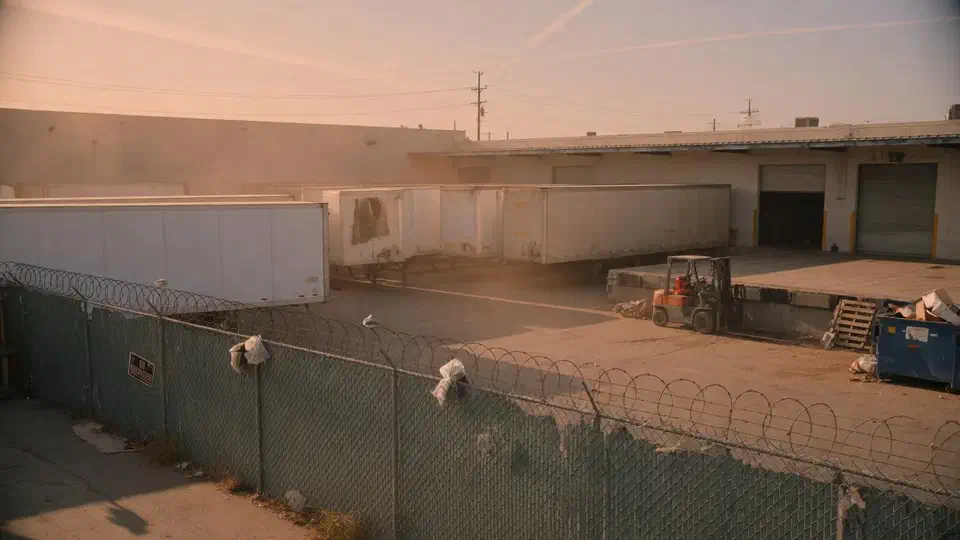
The yard went dark fifty yards past the last camera
The warehouse was not starting from zero. Dock cameras existed. An alarm on the office door existed. The problem was the gravel: parked trailers, a fence line, and no cable path the landlord would approve this quarter.
- 01
Coverage stopped at the building
Interior and dock cameras were fine for the WMS floor. They were useless on the far fence after the last pickup.
- 02
A pole meant a trench
Power and data to the fence was a construction job. The lease and the calendar did not have a trench.
- 03
Nobody owned the night
If something moved on the gravel at 1 a.m., the recording would be found in the morning. That is not a response.
- 04
Guards were a different invoice
A posted guard was not in this budget. The operator wanted eyes and a call, not a new headcount.
How we worked
Walk the yard first, then park the unit
We treated this as a placement, not a camera sale. Scope was written down before the trailer moved. We did not promise a theft percentage.
- 01
Walk sight lines at dusk
We stood where a thief would stand and where a forklift would swing. Out of scope: replacing the building NVR or staffing a guard booth.
- 02
Place the solar unit
The trailer sat on gravel with a view of the far fence and the trailer row. No trench. No new power drop. Mast up, solar clear of shade from the building.
- 03
Set the alert path
Who gets the live call, who is backup, what 'looks like a person on the gravel after 9 p.m.' means. Two-way audio only if the operator wanted a hail.
- 04
Night test
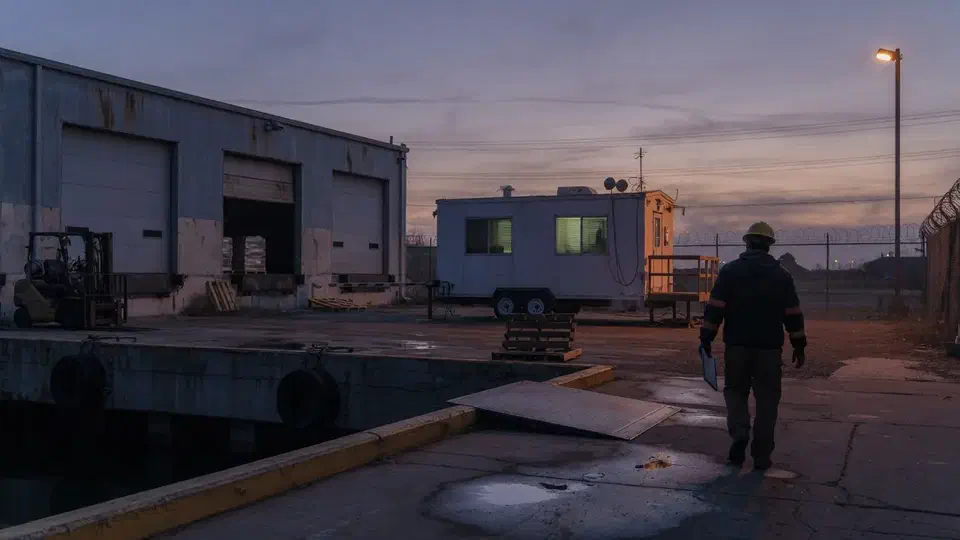
After dark we walked the fence on purpose and confirmed the view, the alert, and the recording. Then we wrote the leave-behind.
What we examined
Five checks, one night walk
The trailer is the hardware. The workstreams are how we knew Saturday would not be the first time anyone looked at the feed.
Sight lines and dead zones
Fence, trailer row, dock approach. Building cameras stayed on the building. We did not pretend one unit sees everything.
Power and uplink
Solar and cellular. No dependence on the warehouse circuit that already ran the dock lights.
Live monitoring path
24/7 eyes on the far fence, with a named on-call at the warehouse for after-hours decisions.
Retention and evidence
How long recordings stay, who can export, and that the office PC is not the only copy.
Yard safety while we work
Placement during a quiet window. OSHA's warehousing page is about people and vehicles, not cameras. We still did not block a dock with a trailer.
The far fence had no cable path. The trailer did not need one.
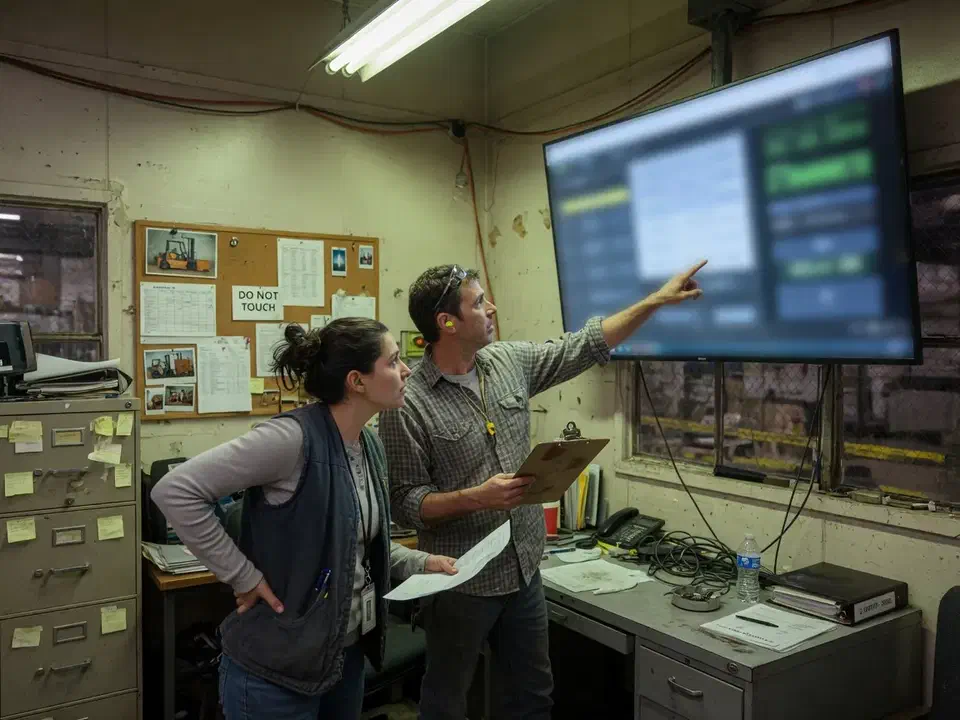
The dock cameras were fine. Fifty yards of gravel past the last lens went dark after the last truck. That is where the trailers sat overnight.
That is the usual starting point for a mobile surveillance trailer. A regional 3PL in the Inland Empire called Secure Techies because the far fence was a facilities project and the calendar was a security project. They run a warehousing site: WMS in the office, scanners on the dock, and a yard the building NVR was never aimed at.
This case study records the dusk walk, the placement, the alert path, and the night test. Client identifiers stay out. The method does not. We will not invent a theft-drop percentage.
Why they called
A warehouse is two businesses sharing a slab. Headquarters has accounting and a WMS login. The yard has parked trailers, copper, and a fence that looks like an invitation after 9 p.m.
CISA’s physical security topic is written for a wider set of sites than this gravel lot. The idea still holds: see the perimeter you actually have, not the one the building cameras imply. Critical infrastructure language is heavier than a 3PL needs. The operator still had a perimeter they could not see.
Building cameras covered the dock and the office door. They did not cover the far fence. Cabling a pole meant a trench, a power drop, and a landlord conversation that was not going to finish this month.
Two facts set the date:
- Overnight trailers were staying on the gravel through the next peak.
- A posted guard was not in the budget, and a trench was not on the lease calendar.
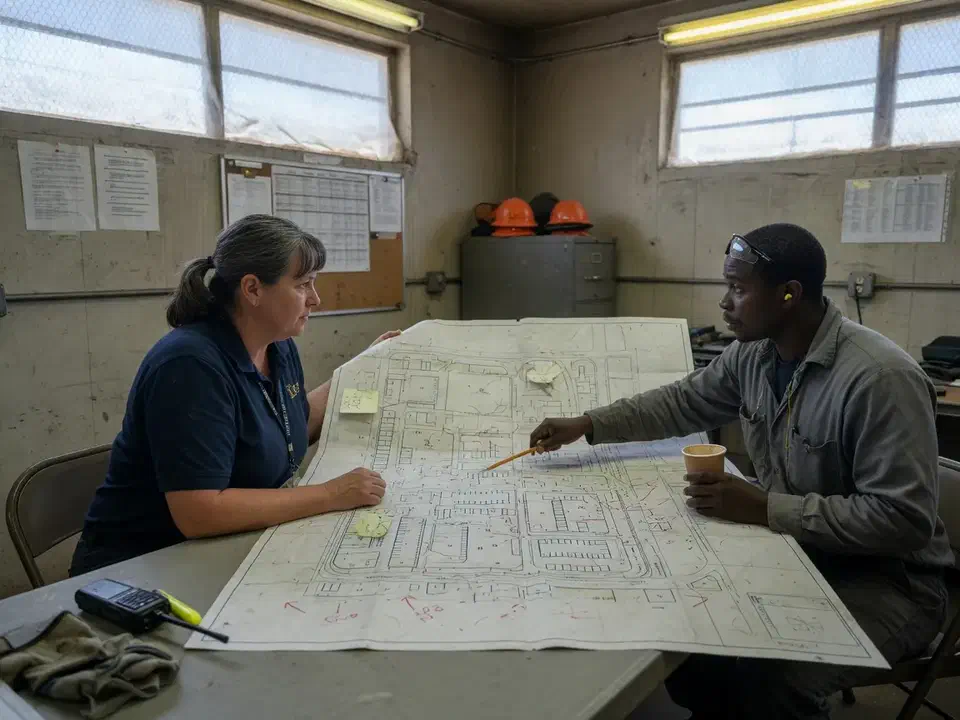
We had no leftover site plan that matched the fence. We walked it.
The lease made the trench conversation worse, not better. A permanent pole is an improvement the landlord has to bless. A hitch on gravel is equipment the operator can move when the lease says so. That is why the trailer won the meeting. We wrote the other sentence into the packet too: this is not a substitute for a pole if they later want a fixed view. Say hitch when it is a hitch.
What this engagement was, and was not
Secure Techies sells mobile CCTV trailers as solar, rapidly deployable units with live monitoring. We do not sell a claimed crime-rate drop. We do not replace a police report with a marketing graph.
We wrote that limit into the statement of work. The operator wanted a view and a call, not a story about arrests.
Out of scope on purpose:
- Replacing the building NVR
- Staffing a guard booth
- A permanent pole and trench
- Any promised percentage reduction in theft
In scope:
- A dusk sight-line walk
- Placement of one solar trailer
- Cellular uplink and live monitoring
- A named after-hours phone tree
- A night test we would write down
- A leave-behind sketch of what the unit can and cannot see
OSHA’s warehousing page is about people and vehicles, not cameras. We still treated the dock as a workplace while we placed a trailer. We did not block a bay to look busy.
How we placed the trailer
The dusk walk
We stood at the far fence at dusk. We stood in the trailer row. We stood where a forklift swings. We marked what the building cameras already saw so we would not sell a second view of the same dock.
The dead zone was honest: gravel, fence, the backs of parked trailers. That is where a catalytic converter or a cut fence happens when nobody is looking.
We also asked who currently gets a call at 1 a.m. The answer was “the recording.” That sentence is why live monitoring was in scope.
Placement day
The unit is solar. It does not need a warehouse circuit. It does not need a trench. That is the product fact. Placement is still a job.
We waited for a quiet window so a trailer on a hitch was not in a pickup lane. Mast up. Solar clear of the building shadow at the hours the panel has to work, not only at noon. August sun is generous. We still marked a winter re-check on the calendar so a low sun and a taller stack of trailers would not quietly starve the battery. Cameras aimed at the fence and the trailer row, not at the neighbor’s yard.
Uplink was cellular on purpose. The warehouse Wi-Fi already had enough opinions. The trailer should not die because someone reset a dock access point. We confirmed a signal at the parking spot before we called the unit placed. A pretty mast with one bar is a recording that stops at midnight.
DHS If You See Something, Say Something is a public habit, not a camera spec. The useful version here is smaller: if the monitor sees a person on the gravel after hours, a named human gets a call. Not a shared inbox. Not “we’ll check in the morning.”
The night test
A placement without a night walk is a brochure.
After dark we walked the fence on purpose. We confirmed the picture, the infrared, and that an alert actually reached the on-call. Two-way audio was tested once so the operator knew what a hail sounded like. They chose to keep hails for confirmed presence, not for every raccoon.
The first night always teaches you what the yard thinks is motion. Headlights on the street. Dust. A cat. We sat with the operator and tightened the zone so the far fence and the trailer row were the trip, not the whole county. A phone tree that rings for wildlife will get silenced by week two. That is worse than no trailer.
Retention was written down: how many days, who can export, and that the office PC is not the only copy. A stolen office computer should not be the only place last night lived.
We did not run a fake “intrusion drill” with a contractor in a hoodie for a photo. We walked the line ourselves and wrote what we saw.
Aiming, neighbors, and the street
A mast that can see a fence can also see a sidewalk. We aimed at the operator’s gravel and the trailer row, not at the street or a neighboring yard. That is manners and it is also how you avoid a complaint that kills the project.
If the trailer row moves next season, the aim moves. We wrote a re-aim as a phone call, not a new construction job. That is the point of a hitch.
Live monitoring is a service with a person on the other end. We walked through what they would say on a hail and what they would not. The warehouse named an on-call manager. A shared “info@” mailbox is not an on-call manager.
CISA’s small and medium business pages and the FTC’s small-business cybersecurity material are mostly about networks and identity. A yard camera does not replace those. It also does not wait on them. The operator still needed MFA on the WMS. That was a different ticket.
What the unit does not do
It does not see the whole county. One mast has a field of view. The dock still belongs to the building cameras.
It does not replace a guard. Eyes and a hail are not a person at the gate. If that is the decision you are making, read remote video monitoring vs guards. This project was the fence gap.
It does not create a theft statistic. We will not write “incidents dropped 62 percent.” The operator can compare police reports later if they want. This page is the placement.
It does not run the WMS. Warehouse IT and yard cameras are neighbors. They are not the same ticket. Help desk still owns scanners. The trailer owns the gravel.
The public mobile surveillance trailers guide and the solar trailer write-up are the product background. This page is one yard.
What the packet contained
- Coverage sketch. What the trailer sees, what the building cameras still own, what remains a dead zone.
- Alert path. Primary, backup, what “after hours” means, when to hail, when to call police.
- Night-test notes. Time, who walked, what the picture showed.
- Retention and export. Days kept, who can pull a clip, where the copy lives.
- Move rules. If the trailer row shifts next season, who calls for a re-aim.
Parking-lot camera work is a cousin. A warehouse yard is not a retail lot. Trucks and a fence are the geometry. We did not copy a shopping-center layout onto gravel.
What we verified before we left the yard
A mast in a photo is not a placement.
| Gate | What “done” meant here |
|---|---|
| Sight lines | Far fence and trailer row covered. Dock left to building cameras |
| Power and uplink | Solar clear of the building shadow. Cellular, not dock Wi-Fi |
| Aim | Operator gravel only. Not the street, not the neighbor |
| Night test | Walk after dark. Picture, infrared, alert to the named on-call |
| Hail | Two-way audio tested once. Used for confirmed presence, not wildlife |
| Retention | Days kept, who can export, copy not only on the office PC |
What they had that they did not have on day one:
- Eyes on the gravel after the last truck
- A phone tree that was not “check the recording in the morning”
- A night-test note with a time and a name
- A re-aim rule when the trailer row moves
What they still did not have, and should not claim:
- A posted guard
- A theft-rate graph
- Coverage of the whole county from one mast
Lessons we would repeat
Walk at dusk. A noon site walk lies about shadows and headlights.
Do not promise the building NVR. If the dead zone is fifty yards past the last lens, say so.
Write the phone tree before the mast goes up. Hardware without a call is a recording.
Keep the dock clear. A security trailer that blocks a pickup window is an operations incident.
Refuse the fake percentage. A client who needs a graph more than a view is buying a different product than the one we placed.
Cellular on purpose. The dock Wi-Fi already had enough opinions. A trailer that dies when someone resets an access point is not a perimeter.
Write the re-aim. Yards change. A hitch is wasted if nobody is allowed to move the unit when the trailer row shifts.
Tune the zone or the phone goes off. A trailer that cries wolf will be ignored. Fence and trailer row. Not headlights on the street.
Mark a winter sun check. A panel that works in August can sit in a building shadow in January. The battery does not send a polite reminder.
Planning your own yard placement
If a fence, a lot, or a trailer row sits outside your last camera and a trench is not on this quarter’s calendar, start with a dusk walk. Bring whoever owns the yard and whoever answers the phone at 1 a.m. We will tell you whether one solar unit is enough or whether you still need a pole later.
Secure Techies works from Canoga Park with warehouses and sites across Southern California. Schedule a consultation if you want the same kind of night-tested placement this operator left with.
For a different project record, see guest Wi-Fi that stopped at the register.
The outcome
The far fence had a view and a phone tree
- A solar mobile surveillance trailer on the gravel with a clear view of the far fence and the trailer row
- No trench and no new power drop
- A written alert path: who is called, who is backup, what counts as after-hours movement
- A night walk that confirmed the picture and the alert before we left
- Building cameras left on the dock, not asked to cover what they cannot see
- A one-page leave-behind: placement photo, coverage sketch, retention, who can export
- Clear statement of what this was not: not a guard replacement study, not a claimed crime-rate drop
Technologies and frameworks
More projects
Other case studies
 Wiping Jobsite Devices the Day a Crew Left
 Microsoft 365 Backup When Retention Was Not Enough
Questions
Frequently asked questions
What is a mobile surveillance trailer?
Why not just add another building camera?
How fast can a trailer be placed?
Did theft go down by a percentage?
Does this replace security guards?
Who watches the video?
Need eyes on a yard this month?
Secure Techies places mobile surveillance trailers for Southern California warehouses, lots, and sites that cannot wait on a trench. Start with a conversation in Canoga Park.